
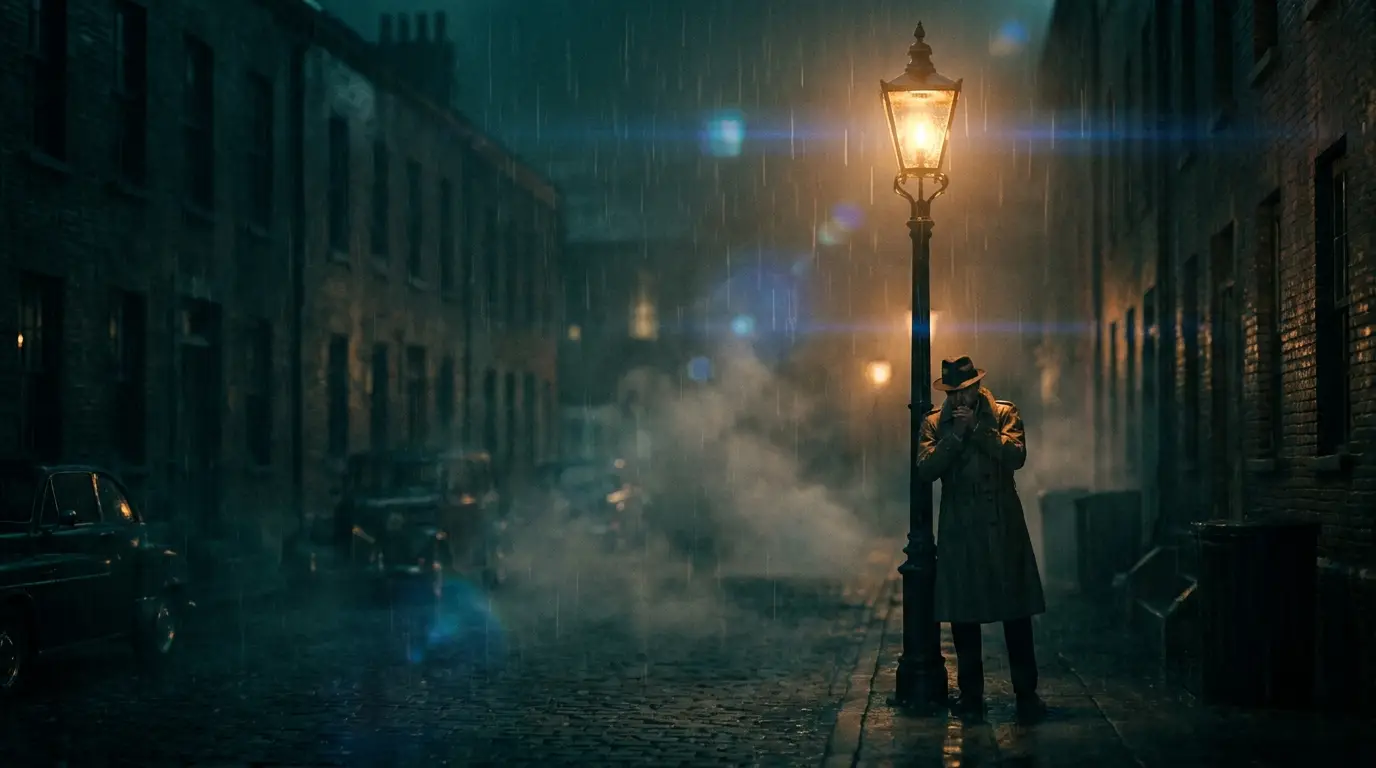
The three-act trailer beat sheet
Act one (world): 3–5 calm establishing beats — slow zooms and drifting aerials over the setting, one character introduction. Act two (threat): the rhythm tightens — dutch angles, handheld energy, storm clouds, faces in shadow, each clip shorter than the last. Act three (spectacle): the money shots — crane-ups to full scale, speed ramps, the biggest image you can prompt — then hard cut to black for the title.
Write all beats before generating any. The discipline of a beat sheet is what separates a trailer from a montage.
Escalation through camera language
Trailers escalate through the camera as much as the content. Start with LOCKED OFF and SLOW ZOOM (stillness reads as calm), move through HANDHELD RUN and DUTCH ANGLE as tension builds, and reserve CRANE UP, DRONE PULLBACK, and SPEED RAMP for the finale. The audience feels the acceleration even if they can't name it.
Keep one visual constant across all acts — a color world, a recurring object, the same character block — so escalating chaos still feels like one film.
Title cards and rhythm
The trailer cadence — clip, clip, TITLE, clip, clip, TITLE — needs breathing room built in. Generate a few near-abstract beats for card backgrounds: smoke drifting, embers rising, light through dust. The SMOKE REVEAL and EMBER STORM effects make purpose-built card backdrops.
Cut to the temp track's structure: impacts land on downbeats, the act-three montage rides the music's build, and the final title card sits in silence. Three seconds of black before the last image is the oldest trick in the trailer house playbook.