
Light first, everything else second
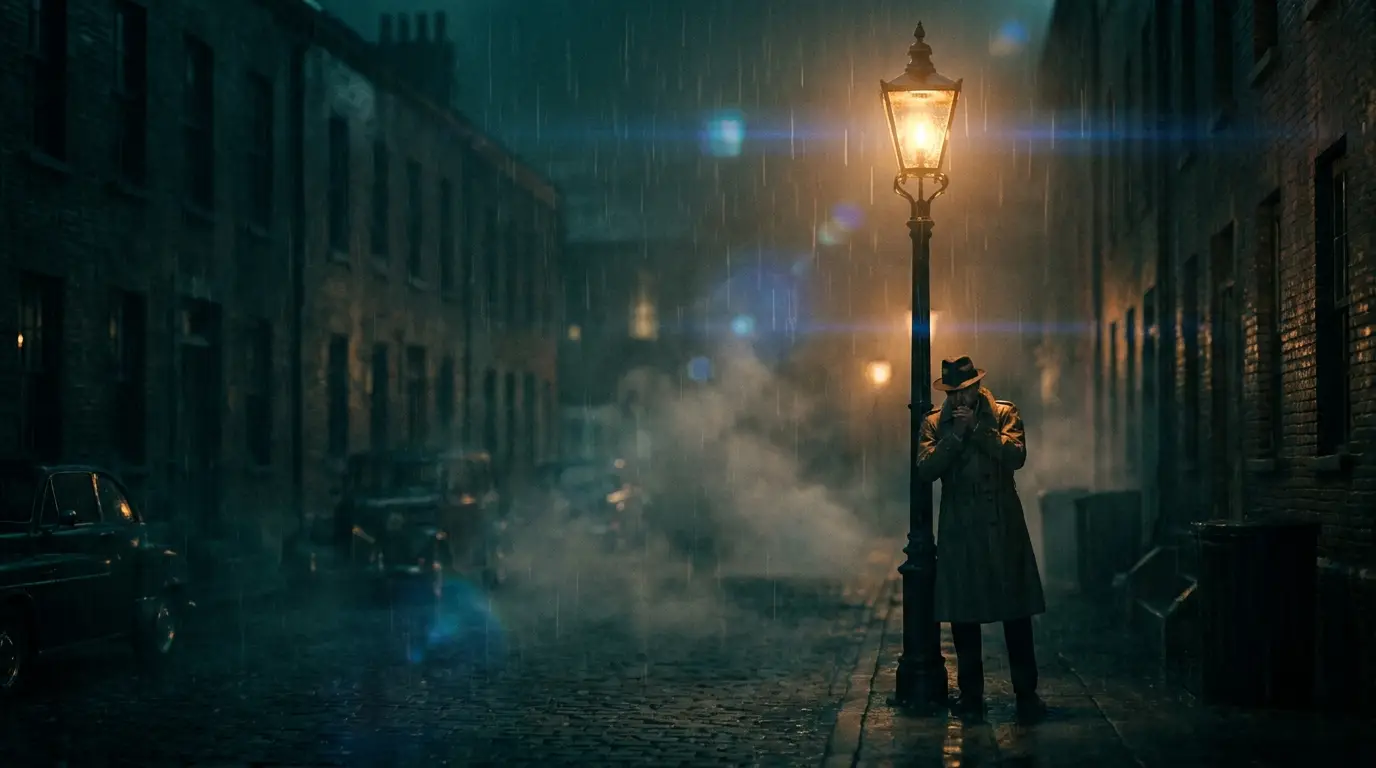
Cinematographers light scenes before they frame them, and prompts should follow the same priority. "Motivated" light — light with a visible source in the world — is what makes footage feel filmed: a neon sign washing a face in pink, a single practical lamp in a dark room, low sun raking long shadows across a street.
Steal named setups: Rembrandt lighting for portrait drama, silhouette-against-window for mystery, top-light with haze for tension. One specific lighting phrase does more than five adjectives — cut "epic, stunning, beautiful" and spend those words on where the light comes from.
Camera movement with intent
Every classic move carries meaning: a DOLLY IN builds intensity toward a realization; a DOLLY OUT isolates a character in their world; a CRANE UP turns a personal moment into an epic one; a VERTIGO ZOOM (the dolly-zoom) signals the ground shifting under someone. Choose the move that matches the emotion, not the flashiest one.
Slow is usually more cinematic than fast. The barely-perceptible SLOW ZOOM is the most-used move in prestige drama for a reason — reserve whip pans and crash zooms for moments that earn violence.
Lens and format language
Models respond to lens vocabulary: "anamorphic" brings oval bokeh and horizontal flares; "85mm portrait lens, shallow depth of field" compresses and isolates; "wide 24mm, deep focus" gives Fincher-like clinical clarity. "35mm film grain" and "volumetric haze" add the texture digital footage lacks.
Combine one lens phrase, one lighting phrase, and one camera preset per shot. That triad — say, anamorphic + neon practicals + slow dolly in — is a complete cinematic sentence, and it's repeatable across a whole sequence for visual consistency.